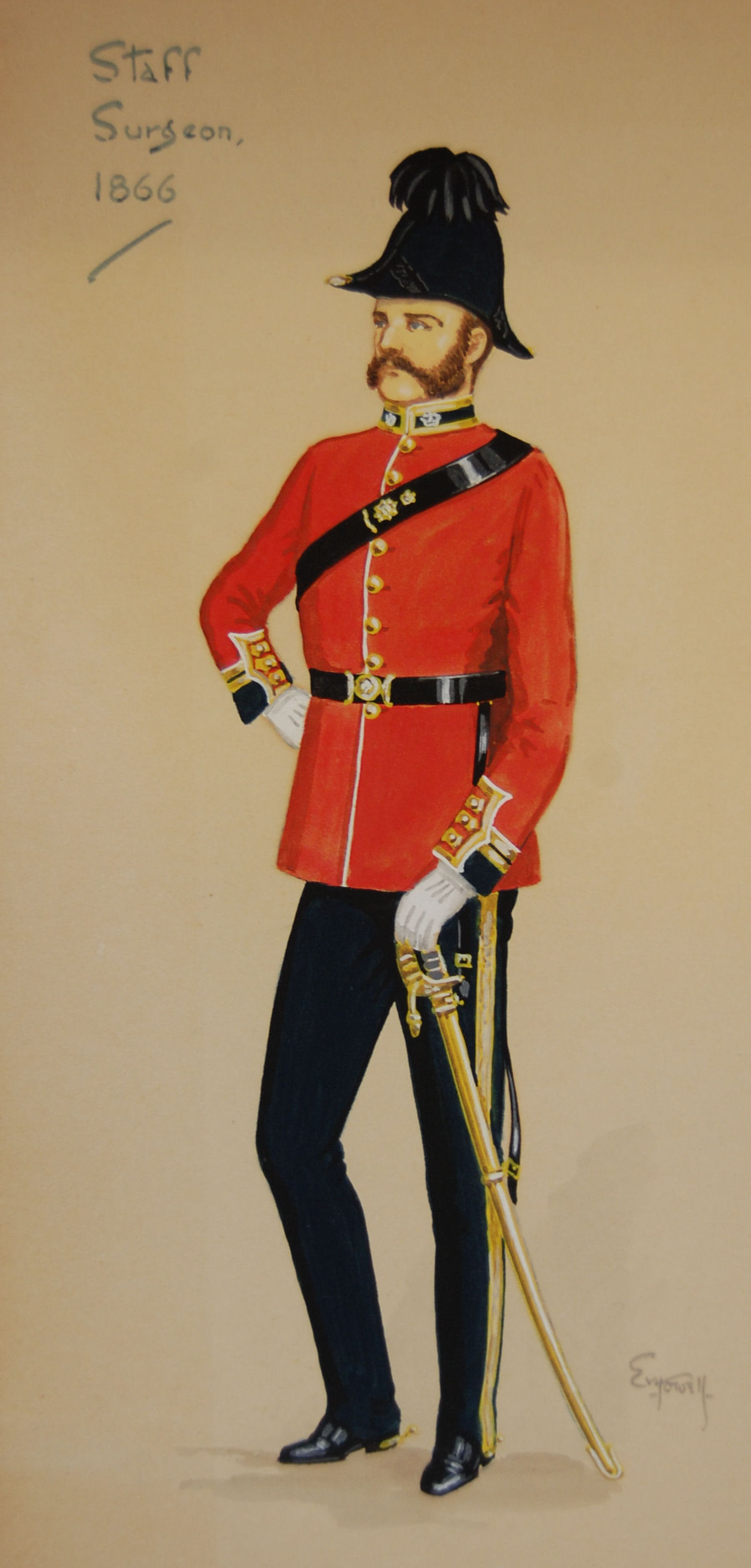
Malta Garrison
The average strength of the garrison was 5,202 men, exclusive of the colonial troops. There were 4,798 admissions into hospital (922 admissions/1000 mean strength), with 67 deaths (12.88 deaths/1000 mean strength), of which 50 occurred in hospital, 11 out of hospital and 6 among the invalids on their passage home and at the Invalid Depôt at Netley.
The sickness was considerably in excess in the 1st/8th and the 60th Regiments, both of which had arrived from England in mid March. The mortality was highest in the Royal Artillery, the 84th and 29th Regiments. The increased ratio of admissions into hospital was caused by miasmatic diseases; the excess of deaths was principally from tubercular diseases and those of the circulatory system.
In 1866, the average number constantly non-effective through sickness (mean daily sick), excluding the Royal Malta Fencible Artillery, was 254 men. The ratio per 1000 mean strength constantly sick was 48.83; the average sick time to each soldier was 17.82 days; the average duration of each case was 19.36 days.
During the year, miasmatic diseases from infections accounted for 2,249 admissions into hospital (432.3/1000 mean strength) with 22 deaths (4.22/1000 mean strength). Admissions were for:
- 40 admissions for parasitic conditions
- 61 for tubercular diseases with 14 deaths
- 265 for respiratory conditions with 3 deaths
- 270 for digestive diseases with 3 deaths
- 112 for nervous system diseases with 1 death
- 75 for circulatory diseases with 12 deaths
- 16 for urinary problems with 1 death
- 310 for venereal diseases
- 447 for accidents with 8 deaths
Eight soldiers were admitted to hospital after receiving corporal punishment. There was 2 suicides, both by firearms. An unsuccessful attempt was made by a sergeant of the Royal Artillery by a corrosive sublimate. The 8 accidental deaths included four deaths from fracture skull caused by falls from the fortifications while the men were inebriated; three deaths were from drowning when a boat capsized. The remaining death was in an intoxicated private soldier of the 60th Regiment, who was run over by a car.
There were 73 admissions for paroxysmal fevers (14.2/1000 mean strength) with 1 death (0.19/1000 strength), 1,031 for continued fevers (198.1/1000 strength) with 19 deaths (3.64/1000 strength), 319 for dysentery and diarrhoea (61.3/1000 strength), 266 for ophthalmia (51.0/1000 strength), and 387 for rheumatism (74.4/1000 strength). There were 4 admissions (0.8/1000 strength) for eruptive fevers. Rheumatism was in many instances the sequel of an attack of fever.
The highest ratio of admissions for continued fevers occurred in the 1st/8th, 60th and the Royal Engineers, which had arrived in Malta in March. The 100th Regiment at Fort Verdala had a high incidence of what the regimental surgeon described as Verdala endemic fever a type of gastric remittent fever. The fever was characterised by tedious convalescence and by the frequent occurrence of orchitis and rheumatism, symptoms consistent with an infection with Brucella melitensis.